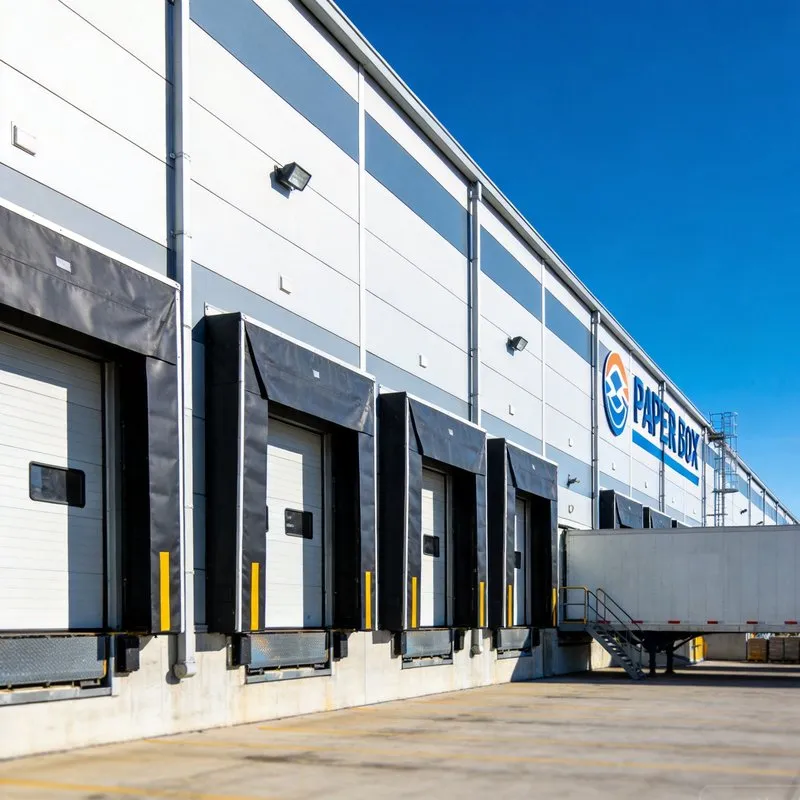
Zero-Defect Packaging: Inside Bincai's 7-Stage Quality Control System for Paper Box Manufacturing
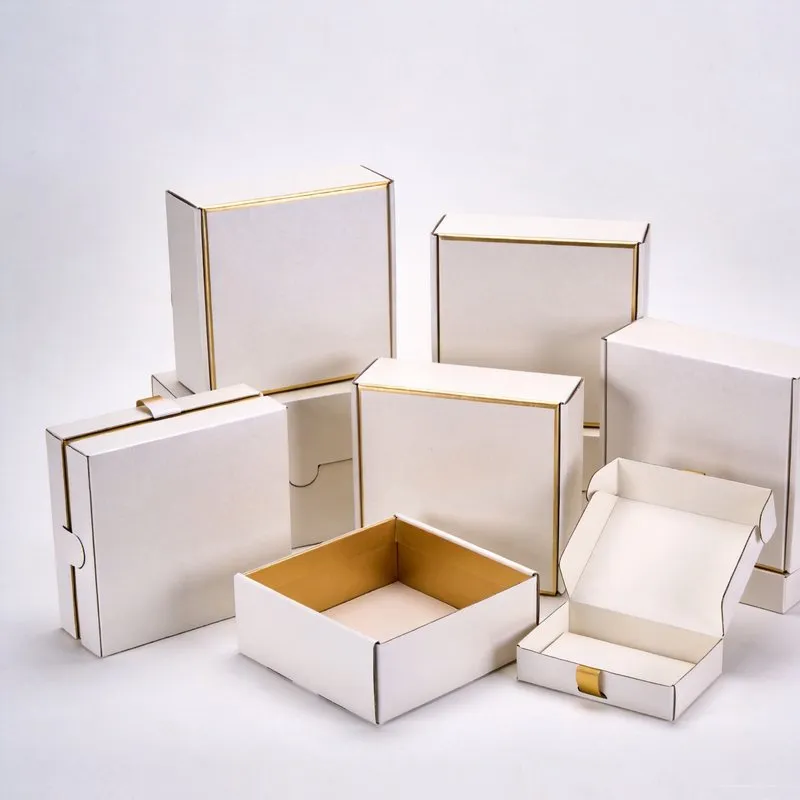
Why Quality Control Defines a Paper Box Manufacturer
When a global cosmetics brand opens 50,000 rigid gift boxes and finds inconsistent gold foil — or an e-commerce retailer discovers that 3% of their mailer boxes fail drop testing — the cost isn’t just the replacement order. It’s the delayed launch, the retailer chargebacks, the brand damage that no refund can repair. This is why premium paper box buyers don’t just buy manufacturing capacity; they buy a quality assurance system.
At Guangdong Bincai Color Printing Co., Ltd., quality isn’t a final inspection step — it’s a philosophy embedded across seven distinct checkpoints. With 1.7 million boxes produced daily across 512+ products, a single undetected defect can cascade. Here’s how the system works.
The Seven Gates: An Overview
| Gate | Stage | What We Check | Tools Used |
|---|---|---|---|
| 1 | Incoming Material | GSM, moisture, surface, caliper | Digital micrometer, moisture meter, visual grading |
| 2 | Pre-Press Proofing | Color accuracy, trapping, imposition | Heidelberg spectrophotometer, X-Rite densitometer |
| 3 | In-Process Print | Density, registration, hickey detection | Inline sensors on KBA Rapida 1050 & Heidelberg 7+1 UV |
| 4 | Post-Print Inspection | Visual defects, color drift, scuffing | Light table, spectrophotometer, gloss meter |
| 5 | Die-Cutting Accuracy | Dimensions, cut quality, crease depth | Digital caliper, ±0.1mm Bobst registration check |
| 6 | Gluing & Assembly | Bond strength, structural integrity, fit | Peel tester, compression tester, manual open/close |
| 7 | Final AQL Sampling | Statistical lot acceptance | ANSI/ASQ Z1.4 AQL 2.5, major/minor/critical classification |
Gate 1: Incoming Material Inspection
Before a single sheet enters production, every batch of raw material undergoes verification:
- Paperboard GSM: Tolerance within ±3% of specification. A 350 GSM board that measures 340 GSM will fold differently, print differently, and fail differently.
- Moisture Content: Maintained at 6.5–8.5%. Excess moisture causes warping during offset printing; insufficient moisture leads to cracking during die-cutting.
- Surface Quality: Visual inspection under 5000K lighting for coating uniformity, fiber coverage, and surface defects.
- Caliper Consistency: Measured at 5 points per sheet. Variance exceeding 0.02mm triggers batch rejection.
Why it matters: Garbage in, garbage out. The KBA Rapida 1050 can print at 15,000 sheets per hour — but only if the substrate is consistent. Bincai’s material reject rate averages under 0.3%, a benchmark achieved through long-term supplier partnerships with mills in Guangdong, Shandong, and Zhejiang.
Gate 2: Pre-Press Proofing
Digital proofs are not optional — they’re mandatory. Before plates are made for any production run over 1,000 units:
- Color Proofing: A calibrated Epson proofing system outputs a color-accurate proof matched against PMS or CMYK target values. The Heidelberg spectrophotometer measures ΔE (color difference) across every patch. Target: ΔE ≤ 2.0 for brand colors, ΔE ≤ 3.0 for process colors.
- Trapping Verification: Print trapping — the overlap between adjacent ink areas — is checked to prevent white gaps between colors. Minimum trap: 0.15mm for offset, 0.25mm for UV.
- Imposition Check: Sheet layout is verified against die-cutting templates to ensure graphics align with structural features (creases, cut lines, windows).
Why it matters: Fixing color at the proof stage costs minutes. Fixing color on a 15,000-sheet press run costs tens of thousands of sheets.
Gate 3: In-Process Print Check
Once the KBA Rapida 1050 4-color or Heidelberg Speedmaster 7+1 UV press begins running, quality monitoring becomes continuous:
- Density Monitoring: Inline densitometers track ink film thickness across the entire sheet width. Drift beyond ±0.05 density units triggers an automatic alert.
- Registration: Multi-color registration is verified at every 500th sheet. The KBA’s automatic register control system maintains positional accuracy within ±0.01mm.
- Hickey Detection: Dust particles and paper debris are the enemy of offset printing. The Heidelberg’s hickey-picking system removes contaminants during the run; operators visually inspect pull sheets every 1,000 impressions.
On the Heidelberg 7+1 UV, the UV curing process adds another dimension: coating uniformity and adhesion are checked under UV inspection lamps.
Why it matters: At 15,000 sheets per hour, 10 minutes of undetected drift = 2,500 defective sheets. Real-time monitoring prevents small problems from becoming big losses.
Gate 4: Post-Print Inspection
After printing and before die-cutting, every sheet passes through a post-print quality gate:
- Visual Inspection: Under 5000K color-corrected lighting (ISO 3664:2009), operators check for ghosting, picking, set-off, and scumming. Each defect type has defined acceptance criteria.
- Color Verification: Random sheets are pulled and measured against the approved proof. Drift beyond ΔE 2.0 triggers a press adjustment.
- Scuff Resistance: For products receiving no lamination or varnish, a Sutherland rub test verifies ink adhesion. Minimum: 100 cycles without visible wear.
- Gloss Measurement: For UV-coated products, gloss levels are measured at 60° geometry. Target: consistent within ±5 gloss units across the run.
Why it matters: A sheet that looks “good enough” under factory lighting may look completely different under retail display lighting. Post-print inspection under standardized conditions catches what the press operator might miss.
Gate 5: Die-Cutting Accuracy Check
The Bobst SP 102-E automatic die-cutter operates at ±0.1mm registration accuracy — but that doesn’t mean every sheet is checked automatically. Humans verify what machines produce:
- Dimensional Verification: Cut dimensions are measured against specifications. Tolerance: ±0.3mm for rigid boxes, ±0.5mm for folding cartons and corrugated mailers.
- Crease Quality: Crease depth and positioning determine how the box folds. Too deep = tearing. Too shallow = spring-back. The Bobst’s makeready system calibrates creasing pressure for each paperboard grade.
- Cut Edge Quality: Under 10× magnification, operators check for rough edges, fiber pull-out, and incomplete cuts. Sharp, clean edges = professional presentation.
- Stripping Confirmation: Waste material must be completely removed. Embedded waste bits cause jams downstream and visual defects in the finished box.
Why it matters: Die-cutting is where structure meets design. A box that’s 0.5mm too wide won’t nest properly. A crease positioned 1mm off will produce an asymmetrical fold visible to the end customer.
Gate 6: Gluing & Assembly Audit
Once boxes are die-cut, they move to high-speed automated folder-gluers (Japanese and Taiwanese models with integrated vision inspection). But automation doesn’t eliminate the need for verification:
- Bond Strength Testing: A spring-loaded peel tester measures the force required to separate glued surfaces. Minimum: 2.5 N/cm for side-seam bonds, 3.0 N/cm for base-forming bonds.
- Compression Testing: For corrugated mailers (BHS 2.5m corrugator, triple-wall capability), a edge crush test (ECT) and box compression test (BCT) verify structural integrity. ECT minimum: 32 lb/in for single-wall, 44 lb/in for double-wall.
- Manual Open/Close Cycle: Rigid boxes with magnetic closures undergo 100 open/close cycles to verify magnet retention and hinge durability. N52-grade neodymium magnets are standard.
- Fit and Finish: Random assemblies are checked for gap consistency, lid alignment, and interior fit. The lid should close with satisfying resistance — not too loose, not too tight.
Why it matters: A beautifully printed box that falls apart when opened is worse than no box at all. The assembly gate is where structure meets the customer’s hands.
Gate 7: Final AQL Sampling
The last line of defense uses ANSI/ASQ Z1.4 (the current standard replacing MIL-STD-105E) with AQL 2.5 sampling:
| Lot Size | Sample Size | Accept | Reject |
|---|---|---|---|
| 151–280 | 32 | 2 | 3 |
| 281–500 | 50 | 3 | 4 |
| 501–1,200 | 80 | 5 | 6 |
| 1,201–3,200 | 125 | 7 | 8 |
| 3,201–10,000 | 200 | 10 | 11 |
| 10,001–35,000 | 315 | 14 | 15 |
Defects are classified into three tiers:
- Critical: Safety hazard, non-functional product, or regulatory violation → zero tolerance (AQL 0.0)
- Major: Visible functional or aesthetic defect affecting usability or salability → AQL 2.5
- Minor: Cosmetic imperfection not affecting function → AQL 4.0
A rejected lot triggers 100% sorting, root cause analysis, and corrective action before resubmission.
The ISO 9001:2015 Backbone
All seven gates operate within Bincai’s ISO 9001:2015 certified quality management system. This means:
- Every gate has documented procedures, not tribal knowledge
- Non-conformances are logged, trended, and reviewed monthly
- Corrective actions have assigned owners and closure deadlines
- Internal audits verify compliance across all seven gates twice annually
- Management review ensures continuous improvement, not just defect detection
For FSC Chain-of-Custody certified orders, additional traceability checks at Gate 1 and Gate 7 ensure the paperboard origin is documented from forest to finished box.
What This Means for International Buyers
When you order from Guangdong Bincai Color Printing, you’re not just buying 1.7 million boxes of daily capacity. You’re buying a quality assurance infrastructure that has been refined over 23 years of manufacturing:
- 7 inspection gates catch defects before they reach your container
- ISO 9001:2015 certification provides auditable quality documentation
- AQL 2.5 sampling aligns with international retail acceptance standards
- FSC Chain-of-Custody supports your brand’s sustainability commitments
- 18,000 sqm facility with dedicated QC zones at every production stage
Our defect rate across all product categories averages under 0.15% — a figure that industry surveys place among the top tier of Chinese paper box manufacturers.
Request a Factory Audit
International buyers are welcome to visit our Foshan facility and witness the 7-stage QC system in operation. Factory audits can be arranged with 48 hours’ notice. Third-party inspection services (SGS, Bureau Veritas, Intertek) are supported and often recommended for first-time orders.
Contact us at qo82@icloud.com or call +86-18934352881 (Mr. Zhou).
Samples: 3–5 days. Digital proofs: 24 hours. Production lead time: 15–22 days standard, 10–15 days express.
Ready to Start Your Packaging Project?
Free consultation · Custom design · Factory-direct pricing
Get a Free QuoteTel: +86-18934352881 | Email: qo82@icloud.com