Automated Window Patching at Scale: How Bincai Integrates PET, PVC, and PLA Windows into 1.7 Million Boxes Daily
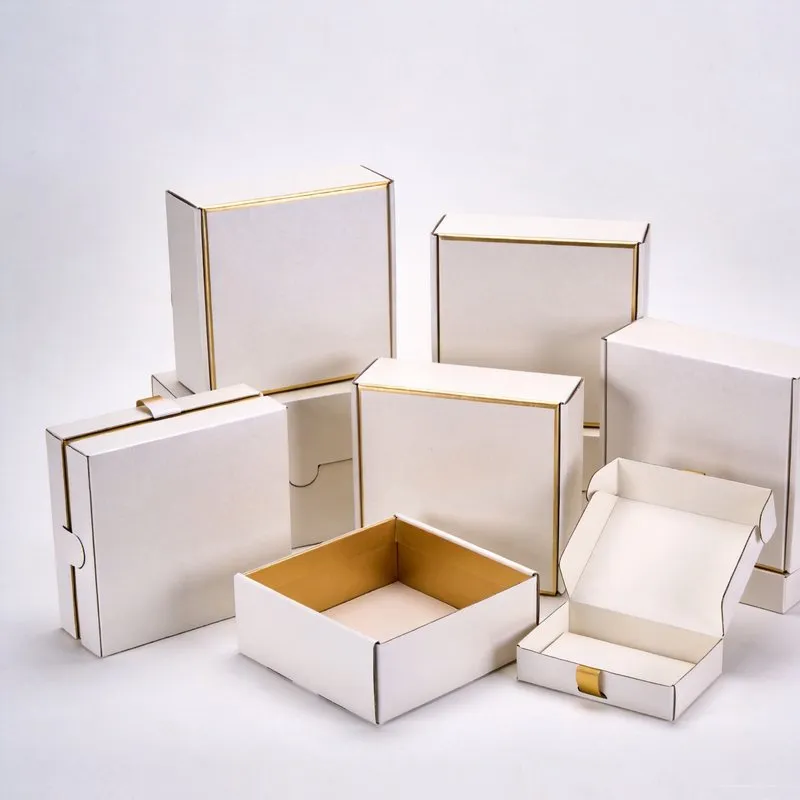
The Window Box: When Packaging Must Show, Not Just Hold
Some products sell themselves — if the customer can see them. A window box bridges the gap between protective packaging and in-store display, letting the product inside do the selling. At Bincai, we manufacture window boxes at industrial scale: hundreds of thousands per day across automated window patching lines that integrate die-cut film windows into folding cartons, rigid boxes, and corrugated mailers.
Window patching is one of the most technically demanding post-print processes in paper box manufacturing. Get it wrong, and you have fogged windows, adhesive bleed, film delamination, or — worst of all — a window that pops out when the customer opens the box. At Bincai, we’ve spent 23 years perfecting this process.
The Three Window Films: PET, PVC, and PLA
Choosing the right window film is the first decision — and it carries cost, compliance, and aesthetic implications.
PET (Polyethylene Terephthalate) — The Industry Standard
- Clarity: Crystal-clear, 90%+ light transmission
- Thickness range: 0.2mm–0.5mm (0.3mm is standard for most cartons)
- Temperature resistance: Stable from -40°C to 70°C — won’t warp in shipping containers crossing the equator
- Recyclability: Widely accepted in PET recycling streams (Resin Code #1)
- REACH/RoHS: Fully compliant — no phthalates, no heavy metals
- Cost: Moderate — roughly 15-20% premium over PVC
- Best for: Cosmetics, luxury goods, electronics, any brand with European or California market compliance requirements
PVC (Polyvinyl Chloride) — The Budget Option (With Caveats)
- Clarity: Good, 85-88% light transmission — very slight blue tint at 0.3mm+
- Thickness range: 0.2mm–0.5mm
- Temperature resistance: Moderate — softens above 60°C
- Recyclability: Poor — PVC contaminates other plastic recycling streams
- REACH/RoHS: Requires phthalate-free formulation — standard PVC contains DEHP/DINP plasticizers above 0.1%, which is non-compliant for EU and California markets
- Cost: Lowest — roughly 25-30% cheaper than PET
- Best for: Domestic markets without strict phthalate regulations, short-term promotional packaging
Bincai’s policy: We stock phthalate-free PVC for clients who specifically request it, but our default recommendation is PET. For export orders bound for the EU, UK, or California, we will not use standard PVC — it’s PET or PLA only.
PLA (Polylactic Acid) — The Compostable Future
- Clarity: Good, 88-90% light transmission — comparable to PET
- Thickness range: 0.2mm–0.4mm (0.3mm is optimal for rigidity)
- Temperature resistance: Lower — softens at 50-55°C. Not suitable for hot-fill applications or extended tropical shipping without climate-controlled containers
- Compostability: Industrially compostable (EN 13432 certified). Breaks down in 90-180 days in commercial composting facilities
- Cost: Highest — roughly 40-50% premium over PET
- Best for: Eco-conscious brands, food packaging with compostable claims, European markets where single-use plastic directives apply
Bincai’s recommendation: PLA windows paired with FSC-certified paperboard and water-based adhesives create a fully compostable window box — a powerful sustainability story for brands marketing to environmentally conscious consumers.
Bincai’s Automated Window Patching Line: How It Works
Window patching at Bincai is not a manual craft process. It’s an automated production line engineered for precision, speed, and repeatability. Here’s how a die-cut carton blank becomes a finished window box in under 10 seconds:
Step 1: Die-Cut Blank Preparation
The folding carton or rigid box blank arrives from our die-cutting department with the window aperture already punched — a precision die-cut opening with 0.1mm tolerance. The aperture is always slightly smaller than the window film by 8-12mm on each edge to provide an overlap zone for adhesive bonding.
Step 2: Automatic Feeding and Registration
Blanks are loaded into the automatic window patching machine’s feeder at 400-500 cartons per hour per line. Optical registration sensors detect printed registration marks to ensure the window film aligns perfectly with any printed graphics around the window border — critical for cosmetics packaging where the window often sits within a decorative frame.
Step 3: Adhesive Application
A rotary or curtain-coating adhesive head applies a precise bead of adhesive around the window aperture on the inside face of the carton blank. The adhesive bead is 3-5mm wide and positioned 2-3mm from the die-cut edge, ensuring:
- Full bonding strength without adhesive squeeze-out into the visible window area
- No adhesive contamination of the window film surface
- Clean, professional appearance on the finished product
Adhesive types we use:
- Hot melt (EVA-based): Fast setting, high initial tack, ideal for high-speed production. Standard for non-food applications.
- Water-based emulsion (PVA): Slower drying but FDA-compliant for indirect food contact. Used for food-grade window boxes (tea, confectionery, bakery).
- UV-curable adhesive: Instant cure under UV light, crystal clear, no solvents. Premium option for luxury cosmetics and spirits packaging where visual perfection is non-negotiable.
Step 4: Film Placement and Bonding
A vacuum pickup head retrieves a pre-cut window film from the film magazine and places it precisely over the adhesive bead. The placement accuracy is ±0.5mm — tight enough that even narrow decorative borders print perfectly around the window. A pressure roller follows immediately, applying 2-3 kg/cm² of uniform pressure to bond the film to the carton blank.
Step 5: Quality Inspection and Stacking
Finished window boxes pass through an inline inspection station where:
- Machine vision cameras check for adhesive bleed, film misalignment, and surface defects
- Backlighting reveals any fogging, scratches, or contamination on the film
- Reject gates automatically divert defective units before they enter the stacking conveyor
Accepted cartons are stacked in counted bundles of 50 or 100, ready for final packing and shipment.
Real-World Applications: Where Window Boxes Shine
Cosmetics and Beauty
Window boxes dominate cosmetics packaging because consumers want to see the color, texture, and finish of the product before purchasing. Bincai produces window boxes for:
- Eyeshadow palettes with die-cut windows revealing the color array
- Lipstick sets where each shade is visible through individual windows
- Skincare jars where the product jar itself sits behind a PET window
- Perfume gift sets with multi-window construction showing both the bottle and accessories
Pro tip: For luxury cosmetics, we recommend PET film with a UV-curable adhesive and a hot-foil stamped border around the window. The metallic frame elevates the perceived value while hiding the adhesive zone.
Food Packaging
Food-grade window boxes require FDA-compliant materials throughout. Bincai’s food-grade window boxes feature:
- PET or PLA film — never standard PVC
- Water-based PVA adhesive certified for indirect food contact
- FSC-certified paperboard printed with low-migration inks on Heidelberg 7+1 UV press
- Optional tamper-evident seals integrated into the window film edge
Applications: tea boxes, chocolate gift boxes, bakery cartons, cookie tins, confectionery packaging.
Electronics and Accessories
For electronics, the window often serves a dual purpose: product display and anti-static protection. Bincai can integrate:
- Anti-static treated PET film for sensitive electronic components
- ESD-safe packaging with conductive coatings on the window film
- Rigid box construction with foam inserts visible through the window
Applications: earbud display boxes, watch packaging, phone case retail boxes, USB accessory cartons.
Toys and Collectibles
Window boxes in the toy industry must balance product visibility with child safety. Bincai’s toy packaging windows use:
- Rounded corners on the die-cut aperture (no sharp edges)
- PET film that resists puncture and tearing
- Secure adhesive bonding tested to withstand handling by enthusiastic young customers
The Bincai Advantage: Why 23 Years of Window Patching Matters
Window patching looks simple on paper. In production, it’s a cascade of interdependent variables:
- Film tension control — too tight, and the film pulls away from the adhesive during curing; too loose, and it sags into the window opening
- Adhesive open time — hot melt sets in 2-5 seconds; the film placement, pressure, and curing must happen within that window
- Humidity management — paperboard absorbs moisture and expands; a carton blank that was perfectly die-cut at 45% RH may have a differently sized aperture at 65% RH
- Static electricity — PET and PVC films accumulate static charge, attracting dust and making precise vacuum pickup unreliable without anti-static treatment
- Registration drift — at 400 cartons per hour, a 0.1mm registration drift per cycle compounds to 4mm after just 40 cartons without active correction
At Bincai, we’ve solved all of these. Our window patching lines run 24/7 with <0.5% defect rate — not because we’re lucky, but because we’ve spent two decades engineering out every failure mode.
Compliance and Certifications
Every window box that leaves Bincai’s factory is backed by:
| Standard | Scope | Bincai Compliance |
|---|---|---|
| ISO 9001:2015 | Quality management | Certified — annual SGS audit |
| FSC CoC | Responsible forestry | Certified — full chain of custody |
| REACH (EU) | Chemical safety | PET and PLA films fully compliant; phthalate-free PVC available |
| RoHS | Hazardous substances | All films and adhesives RoHS-compliant |
| FDA 21 CFR | Indirect food contact | PVA adhesives certified; PET film meets FDA requirements |
| EN 13432 | Industrial compostability | PLA film certified for compostable packaging claims |
| G7 Master | Color consistency | Certified — across-window, across-job color matching |
Window Boxes: The Bottom Line
A well-executed window box does more than show the product — it tells the customer “we have nothing to hide.” It’s a statement of confidence in the product’s appearance, quality, and desirability.
At Bincai, we manufacture that confidence at industrial scale — 1.7 million boxes daily, with every window perfectly aligned, every adhesive bond tested, and every carton ready to sell your product before the box is even opened.
Ready to add windows to your packaging? Contact Bincai for a free design consultation and window film sample kit. We’ll help you select the right film, adhesive, and production parameters for your specific product and market.
Bincai Printing — 23 years of paper box manufacturing excellence. 18,000 sqm ISO 9001 & FSC certified factory in Foshan, Guangdong. KBA 1050 4-color + Heidelberg 7+1 UV presses. Daily output: 1.7 million boxes. Serving brands across cosmetics, food, electronics, toys, and luxury goods worldwide.
Ready to Start Your Packaging Project?
Free consultation · Custom design · Factory-direct pricing
Get a Free QuoteTel: +86-18934352881 | Email: qo82@icloud.com