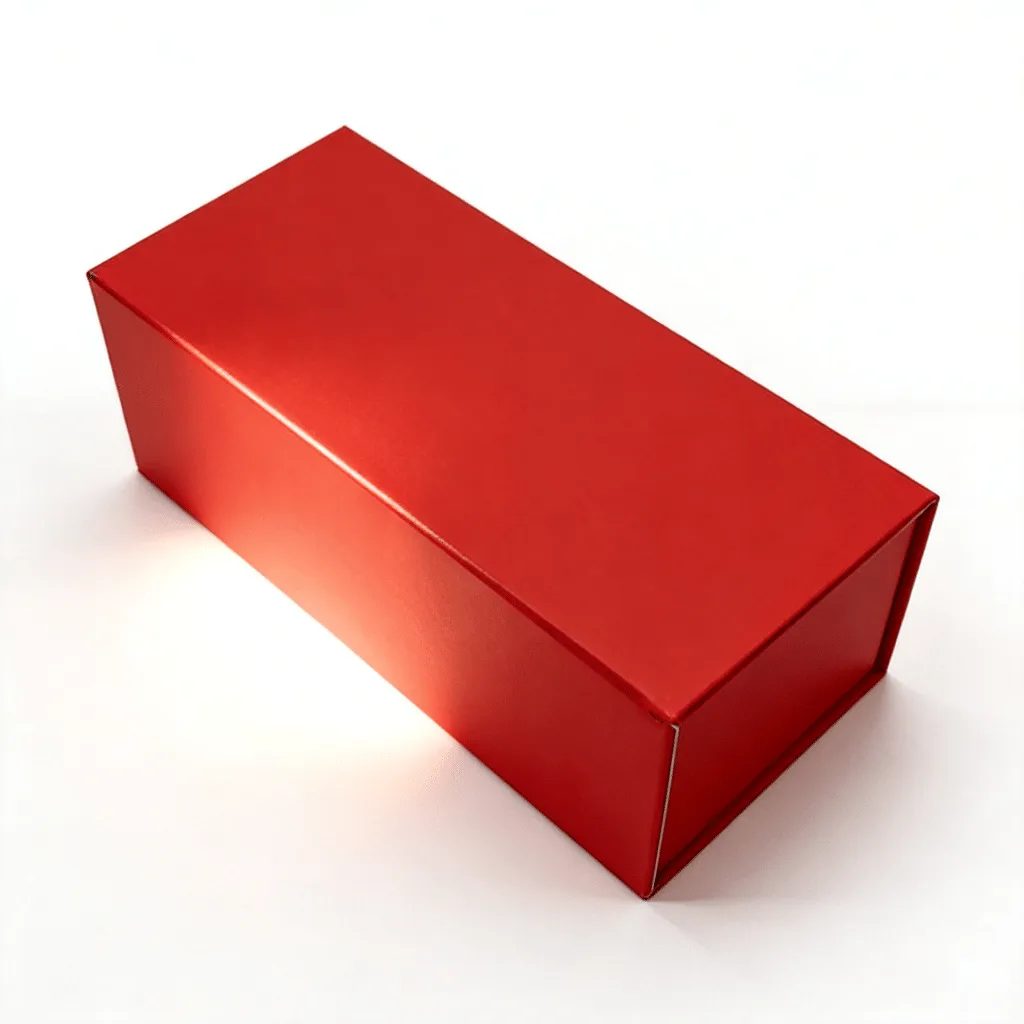
The Complete OEM Paper Box Packaging Journey: How Bincai Takes Your Design from Concept to Mass Production
Beyond the Quote: What a True OEM Partnership Looks Like
Many buyers approach Chinese packaging manufacturers with a simple question: “How much for 10,000 boxes?” At Guangdong Bincai Color Printing, we believe the right question is: “What happens between my design file and 10,000 perfect boxes?”
The answer is a 12-stage OEM journey that transforms a concept into a production-ready, quality-verified, export-shipped product. With 23 years of manufacturing expertise (established 2003), 18,000 sqm of factory floor across 6 dedicated production lines, KBA 1050 4-color and Heidelberg Speedmaster 7+1 UV presses, and ISO 9001:2015 and FSC chain-of-custody certifications, Bincai has refined this journey into a science that delivers 1.7 million boxes daily to brands across 40+ countries.
Here is exactly how it works — stage by stage.
Stage 1: Design File Intake & Prepress Analysis
The journey begins when you send your design files. Our 8-person prepress team, working on Heidelberg Prinect workflow stations, conducts a comprehensive design-for-manufacturability (DFM) review:
- File format check: We accept AI, PDF, CDR, EPS, and PSD. Native Adobe Illustrator files with embedded fonts and outlined text produce the fastest turnaround.
- Dimensional verification: Are panel sizes compatible with our sheet-fed press formats (max sheet: 1,050 × 750mm on KBA 1050)?
- Bleed, trim, and safe zone audit: We verify 3mm bleed on all edges, correct trim marks, and that critical text/elements remain within the safe zone.
- Color separation review: CMYK or spot color? How many Pantone references? We identify potential color matching challenges before a single sheet is printed.
- Structural feasibility: Does the box design account for paperboard caliper (thickness), crease allowance, and folding mechanics? Our structural engineers flag issues at this stage — not after tooling is cut.
Typical turnaround for DFM feedback: 4–8 business hours. You receive a marked-up PDF with annotations, color separation preview, and a structural feasibility report.
Stage 2: Material Consultation — Choosing the Right Substrate
This is where many projects either succeed or fail. The paperboard substrate determines structural integrity, print quality, tactile feel, and cost. Bincai stocks over 60 paperboard variants across these families:
| Substrate | Typical Applications | Thickness Range | Key Properties |
|---|---|---|---|
| SBS (Solid Bleached Sulfate) | Luxury cosmetics, premium spirits, high-end electronics | 0.3–1.2mm (12–48pt) | Bright white, excellent print surface, food-grade available |
| CCNB (Clay-Coated Newsback) | Folding cartons, mass-market retail, cereal/snack boxes | 0.3–0.8mm (12–32pt) | Cost-effective, good print surface on coated side, recyclable |
| Kraft / CRB (Coated Recycled Board) | Eco-friendly brands, organic products, subscription boxes | 0.4–1.5mm (16–60pt) | Natural brown aesthetic, 100% recycled content, FSC-certified options |
| FBB (Folding Box Board) | Pharmaceutical, confectionery, personal care | 0.3–0.7mm (12–28pt) | Mechanical pulp middle layer, excellent stiffness-to-weight ratio |
| Duplex / Greyboard | Rigid box bases, luxury gift boxes, jewelry boxes | 1.0–3.0mm (40–120pt) | High stiffness, wrapped with printed paper (120–157gsm art paper typical) |
| Corrugated (E/B/C/AB Flute) | Shipping mailers, e-commerce boxes, heavy-duty industrial | 1.2–7.0mm | High crush resistance, double/triple-wall options, ISTA-certified |
Our team consults with you on material selection based on your product weight, retail environment, sustainability goals, and target unit cost. We provide sample swatches by courier so you can feel the material before committing.
Stage 3: Prototyping — 48 Hours from File to Physical Sample
Speed matters. Bincai operates a dedicated prototyping cell with:
- 2 Kongsberg X-series digital cutting tables for same-day structural samples
- Epson SureColor large-format proofing printers calibrated to match KBA 1050 / Heidelberg 7+1 output via Heidelberg Prinect Color Proof Pro
- In-house sample makers with an average of 12 years of hand-finishing experience
Standard prototyping timeline: 48 hours from approved design file to physical sample. This includes:
- Structural sample (unprinted, white/ kraft board) — Day 1
- Color-accurate proof with actual substrate — Day 2
- Optional: surface finishing samples (foil stamp, emboss, spot UV, soft-touch) — Day 2–3
For rush projects, we offer a 24-hour express prototyping service. Samples ship via DHL/FedEx with tracking — typical delivery to North America/Europe in 3–5 business days.
Stage 4: In-House Tooling & Die Making
Unlike factories that outsource die manufacturing, Bincai operates a full in-house tooling department with:
- 3 CNC laser die-cutting rule benders (Bograma, SBL)
- CNC engraving machines for embossing/debossing brass dies
- CNC knife cutting for stripping and blanking tools
- Heat-treatment station for hardening cutting rules
Typical die production lead time: 3–5 days for standard folding carton dies, 5–7 days for complex rigid box or multi-cavity dies. Because tooling is in-house, we can modify dies within 24 hours if structural adjustments are needed after sample review — no waiting for an external supplier.
Die storage: We maintain a climate-controlled die library with over 15,000 active dies for repeat clients, retrievable within 30 minutes for reorders.
Stage 5: Production Planning & Scheduling
Once tooling is approved and the sample is signed off, production planning begins. Our ERP system (custom-built on SAP Business One backbone) handles:
- Material reservation: Paperboard from our 2,000-ton climate-controlled raw material warehouse
- Machine scheduling: Load-balanced across 6 production lines
- Ink kitchen preparation: Pantone spot colors mixed in our automated ink dispensing system (tolerance: ΔE ≤ 1.5)
- Finishing queue: Foil stamping, embossing, spot UV, lamination sequenced for optimal workflow
- Assembly line allocation: 8 hand-assembly lines plus 2 automated folder-gluers (Bobst Ambition 106 A2)
Clients receive a production schedule PDF with milestone dates: print start, finishing completion, assembly start, QC inspection, and ready-to-ship date.
Stage 6–8: Print, Finish, Assemble
These three stages form the manufacturing core — where your design becomes physical product.
Printing (Stage 6)
Our KBA 1050 4-color offset press handles high-volume runs (10,000+ sheets) at 15,000 sheets/hour with Heidelberg Prinect Inpress Control 3 for closed-loop color management. The Heidelberg Speedmaster 7+1 UV press handles premium jobs requiring UV-curable inks, in-line coating, and extended gamut printing.
Every 500 sheets, our press operators pull a sample sheet for densitometer reading against the signed-off proof. Color deviation beyond ΔE 2.0 triggers immediate recalibration.
Finishing (Stage 7)
Post-print finishing includes:
- Hot foil stamping: 6 Bobst-style machines, up to 3 foils per pass, 2,500 sheets/hour
- Embossing/debossing: Single-level, multi-level, and sculpted embossing with brass dies machined in-house
- Spot UV coating: Screen and flexo application, gloss and matte variants
- Soft-touch / velvet lamination: BOPP and PET film options, 1.2–2.5 mil thickness
- Die-cutting: Bobst-style automatic die-cutters, 7,500 sheets/hour, ±0.15mm accuracy
- Folding/gluing: Bobst Ambition 106 A2 folder-gluers with automatic quality inspection (glue detection, window alignment, code reading)
Assembly (Stage 8)
Rigid boxes, magnetic closure boxes, and complex multi-piece packaging go through our 8 hand-assembly lines where 200+ skilled workers handle:
- Wrapping printed paper around greyboard shells
- Inserting magnetic closures, ribbons, and elastic bands
- Installing foam/EVA/velvet inserts
- Attaching handles, hinges, and metal corners
- Final quality inspection before packing
Stage 9: Quality Control — Multi-Gate Inspection
Quality at Bincai is not a final checkpoint; it is embedded at every production stage. Our quality management system includes:
| Gate | Stage | Inspection Method | Standard |
|---|---|---|---|
| IQC | Incoming materials | Paperboard caliper, moisture content, brightness, GSM verification | ISO 536, ISO 2470 |
| IPQC-1 | During printing | Densitometer color check every 500 sheets; registration check | ΔE ≤ 2.0 |
| IPQC-2 | During finishing | Foil adhesion (tape test), crease quality, die-cut accuracy | ASTM F2252 |
| IPQC-3 | During assembly | Glue bond strength, magnet pull force, insert fit, visual inspection | TAPPI T-403 |
| FQC | Pre-packing | AQL 1.0 Level II sampling (ANSI/ASQ Z1.4); dimensional check, functionality test | Client spec |
| OQC | Pre-shipment | ISTA 3A drop/vibration test for shipping durability; final quantity audit | ISTA 3A |
Our in-house testing laboratory is equipped with:
- Burst strength tester (Mullen) — ASTM D774
- Edge crush tester (ECT) — TAPPI T-811
- Box compression tester (BCT) — TAPPI T-804
- Climate chamber for accelerated aging and humidity resistance
- Spectrophotometer (X-Rite) for color measurement
- Cobb tester for water absorption — ISO 535
Stage 10: Packing & Palletizing
How boxes are packed for export matters as much as how they are manufactured. Bincai’s packing protocol:
- Individual box protection: Each box is placed in a polybag (optional anti-tarnish paper for foil/metallic finishes), then packed in master corrugated shipping cartons.
- Master carton specification: Double-wall BC-flute corrugated, 200lb test minimum, with internal dividers for multi-piece boxes.
- Palletization: Standard 1,100 × 1,100mm export pallets, stretch-wrapped with edge protectors, maximum stack height 1.5m (unless client specifies otherwise).
- Flat-ship option: For rigid telescopic boxes, we offer flat-ship design (boxes ship unassembled, assembled at destination) — reducing shipping volume by up to 60% and freight cost by 40–50%.
Stage 11: Export Documentation & Logistics
Bincai’s export department handles all documentation:
- Commercial invoice and packing list with HS codes
- Certificate of Origin (Form A / Form E for preferential tariff treatment)
- FSC chain-of-custody certificate (for FSC-certified orders)
- Bill of Lading (FCL) or House Bill (LCL)
- Fumigation certificate (if required for solid wood pallets; we default to heat-treated/ISPM-15 stamped pallets to avoid fumigation)
Our Foshan factory location, 120km from Shenzhen Yantian Port and 90km from Guangzhou Nansha Port, gives us access to competitive ocean freight rates. Typical transit times:
- US West Coast (Los Angeles/Long Beach): 14–18 days
- US East Coast (New York/Newark): 28–33 days
- Europe (Rotterdam/Hamburg): 25–30 days
- Middle East (Jebel Ali): 15–20 days
- Southeast Asia (Singapore/Port Klang): 5–8 days
Air freight and express courier (DHL/FedEx/UPS) options are available for urgent orders and samples.
Stage 12: Post-Delivery Support & Reorder Optimization
The OEM relationship doesn’t end when the container ships. Bincai provides:
- Digital production archives: Every job is digitally archived — Pantone formulas, die specifications, material lot numbers, and QC reports are preserved for exact reorder matching.
- Reorder optimization: For repeat orders, we analyze production data to suggest efficiency improvements — nesting optimization, gang-run opportunities with compatible jobs, or material upgrades based on market feedback.
- Design iteration support: As your brand evolves, we provide updated samples, new finish options, and structural redesigns — with existing tooling as the starting point.
Why 1,200+ Global Brands Choose Bincai for OEM Paper Box Manufacturing
When you partner with Bincai, you’re not just buying boxes — you’re accessing:
- 23 years of specialized paper box engineering (since 2003)
- 18,000 sqm factory with 6 dedicated production lines
- In-house tooling — no dependency on external die suppliers
- Dual press capability: KBA 1050 for volume + Heidelberg 7+1 UV for premium
- 1.7 million boxes daily output — we scale with your growth
- ISO 9001:2015 quality management + FSC chain-of-custody certified
- 200+ skilled assembly workers, 8 hand-finishing lines
- 40+ country export experience with full documentation support
- 48-hour prototyping, 3–5 day die production, 15–25 day standard production lead time
Start Your OEM Journey
Whether you’re launching a new product line, refreshing existing packaging, or scaling from boutique to mass production, Bincai’s 12-stage OEM journey ensures your paper box packaging meets the highest standards of quality, consistency, and cost-efficiency.
Contact us with your design files or concept brief to receive a DFM review, material recommendation, prototype timeline, and competitive quotation — typically within 24 hours.
Visit gdbcprint.com or email our OEM team to begin your packaging journey.
Guangdong Bincai Color Printing Co., Ltd. — Foshan, Guangdong, China. ISO 9001:2015 | FSC C156462. 23 years of paper box engineering excellence.
Ready to Start Your Packaging Project?
Free consultation · Custom design · Factory-direct pricing
Get a Free QuoteTel: +86-18934352881 | Email: qo82@icloud.com