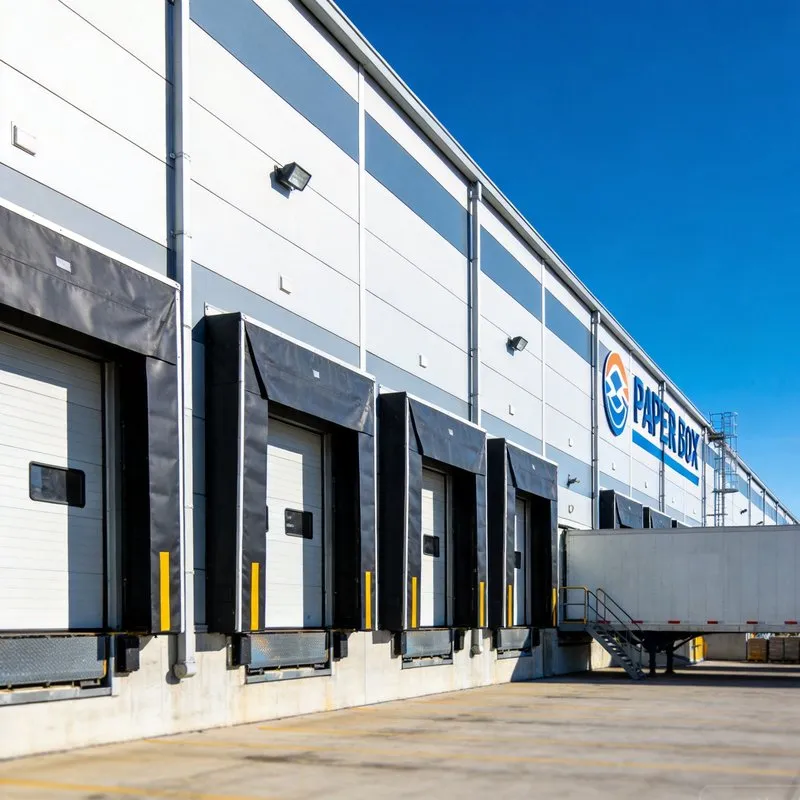
Behind Every Bincai Box: How Our Premium Paperboard Sourcing, FSC Chain-of-Custody, and Supplier Partnerships Deliver Consistent Quality at 1.7 Million Boxes Daily
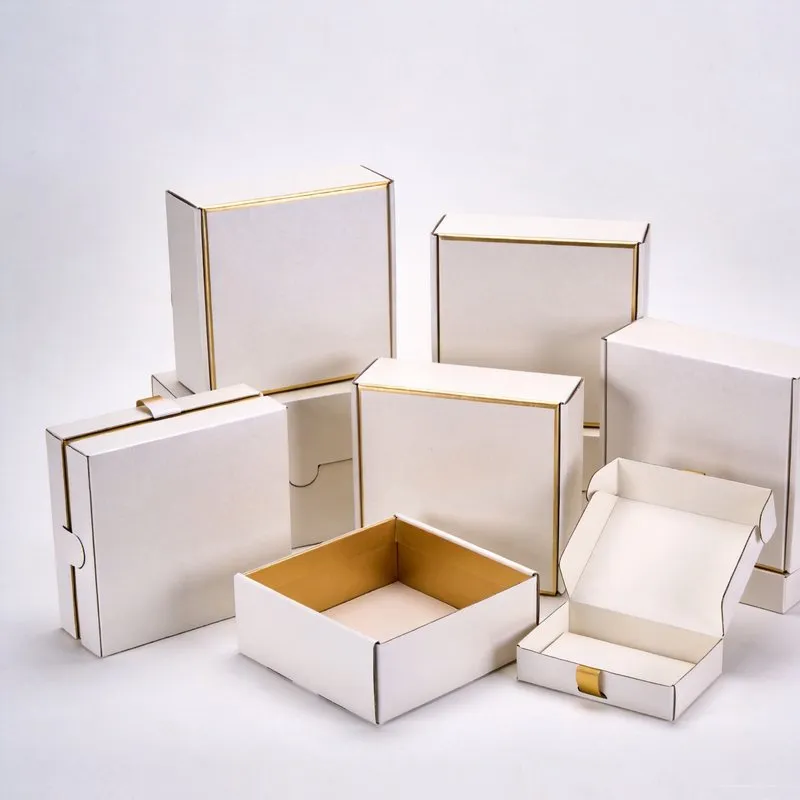
It Starts with Paper
Your product’s first impression begins with the paperboard that surrounds it. The weight of a rigid luxury box lid. The crisp fold of a tuck-top carton. The crush resistance of a corrugated mailer crossing the Pacific. Before a single sheet hits our KBA 1050 or Heidelberg 7+1 UV press, before a die is cut, before a magnet is embedded — there’s paper. And not all paper is equal.
At Guangdong Bincai Color Printing Co., Ltd., we consume over 80 metric tons of paperboard daily across six production lines. That’s approximately 40 shipping containers of raw material per month. At this scale, material consistency isn’t just a quality issue — it’s an existential one. One bad batch of greyboard with incorrect moisture content can ripple through 50,000 boxes before detection. We’ve engineered our sourcing to make that impossible.
The Five Paperboard Families We Source
Bincai stocks and processes five primary paperboard categories, each sourced from mills with verified ISO 9001, ISO 14001, and FSC certifications:
1. SBS (Solid Bleached Sulfate) — Grades: 200–400 gsm
Primary use: Premium folding cartons, luxury cosmetic boxes, pharmaceutical packaging, food-grade cartons.
SBS is the highest-grade paperboard in our inventory — virgin bleached fiber with a smooth, white printing surface on both sides. Our primary SBS mills are located in Shandong and Jiangsu provinces, producing board with:
- Brightness: 88–92% ISO (TAPPI T-452)
- Smoothness: 0.8–1.2 μm PPS (Parker Print-Surf)
- Stiffness (Taber): 12–45 mN·m at MD, depending on caliper
- FDA 21 CFR 176.170 compliance for indirect food contact
Bincai’s usage: Approximately 25,000 metric tons annually. Every sheet is tested for pH (6.5–8.0 range), moisture content (5.5–7.5%), and caliper tolerance (±3%) before acceptance.
2. CCNB (Clay-Coated Newsback) — Grades: 250–450 gsm
Primary use: Retail folding cartons, general-purpose gift boxes, mid-range packaging where cost-efficiency matters.
CCNB combines a coated white top surface with a grey/brown recycled-fiber back. It delivers 60–70% of SBS print quality at roughly half the cost. Our CCNB sources span three mills in Guangdong and Zhejiang.
- Top brightness: 78–84% ISO
- Back side: Uncoated grey, 100% recycled fiber content
- Coating weight: 15–25 g/m² per side
- Recycled content: 70–100% post-consumer/post-industrial fiber
Bincai’s usage: Approximately 15,000 metric tons annually. We maintain a 3-supplier rotation to prevent single-source dependency and continuously benchmark quality.
3. Kraft Paperboard — Grades: 150–400 gsm
Primary use: Eco-friendly gift boxes, sustainable retail packaging, food-safe boxes, corrugated liners.
Kraft is the workhorse of sustainable packaging — unbleached, high-strength, naturally brown with visible fiber texture. Bincai sources kraft from FSC-certified mills in Fujian and Guangxi, with full chain-of-custody documentation.
- Burst index: 3.5–5.5 kPa·m²/g
- Tear index: 8–14 mN·m²/g
- Recycled content options: 0% (virgin), 50%, or 100% post-consumer
- Soy-based ink compatibility: Excellent absorption for waterless and vegetable-oil inks
Bincai’s usage: Approximately 12,000 metric tons annually. Our kraft supply chain is 100% FSC chain-of-custody certified — every shipment arrives with FSC transaction certificates that we retain for 5 years.
4. FBB (Folding Boxboard) — Grades: 200–350 gsm
Primary use: High-end folding cartons requiring superior stiffness-to-weight ratio, confectionery, tea, and electronics packaging.
FBB features a three-ply construction: bleached chemical pulp outer plies with a mechanical pulp middle layer. This sandwich structure delivers 15–20% more bending stiffness than SBS at equal grammage — critical for boxes that need to stand upright on retail shelves.
- Stiffness advantage: 15–20% over equivalent-weight SBS
- Bulk (thickness): 1.5–1.8 cm³/g
- Printing surface: Single-side coated, 85–90% brightness
- Typical calipers: 0.35–0.55 mm
Bincai’s usage: Approximately 5,000 metric tons annually. Our FBB sourcing partnership spans 14 years with a single qualified mill — consistency that our longest-tenured clients depend on.
5. Greyboard / Chipboard — Grades: 800–2000 gsm
Primary use: Rigid box construction (setup boxes), magnetic closure boxes, luxury gift boxes.
Greyboard is the structural backbone of rigid luxury packaging. Made from 100% recycled fiber, it provides the thickness and heft that distinguishes a premium rigid box from a folding carton. Bincai’s greyboard arrives in sheets up to 1,200 × 1,600 mm and calipers from 0.8 mm to 2.5 mm.
- Density: 0.65–0.75 g/cm³
- Moisture content: 8–10% (controlled storage)
- Warp tolerance: < 2 mm per 500 mm sheet length
- Ply adhesion: > 150 J/m² (Scott bond test)
Bincai’s usage: Approximately 23,000 metric tons annually — our highest-volume material category. We stock 6 calipers (800, 1000, 1200, 1400, 1600, 2000 gsm) in climate-controlled warehousing to prevent moisture-related warping before production.
FSC Chain-of-Custody: From Certified Forest to Your Custom Box
Bincai holds FSC chain-of-custody certification (FSC-C147399) since 2020 — meaning every batch of FSC-certified paperboard we receive is tracked through our production, inventory, and shipping systems to your finished box.
How FSC chain-of-custody works at Bincai:
Incoming receipt: Each FSC shipment arrives with a transaction certificate (TC) from the supplier. Our receiving team verifies the FSC claim code against the physical material.
Inventory segregation: FSC-certified and non-certified materials are stored in physically separated warehouse zones with color-coded rack labels.
Production controls: When a customer orders FSC-certified boxes, the job ticket specifies FSC material codes. Our ERP system (custom-built for packaging manufacturing) tracks batch numbers from raw material to finished pallet.
Output claims: Every FSC-certified shipment includes an FSC claim on the invoice and packing list. Bincai maintains a transaction certificate database with full traceability for 5 years.
Annual audit: Our FSC certification is audited annually by an accredited certification body. In our 2025 audit, we achieved zero non-conformances — our 8th consecutive clean audit.
Why it matters for your brand: When your box carries an FSC label, your customers can scan it and trace the fiber back to responsibly managed forests. In 2026, 67% of global consumers say they would pay a premium for sustainably packaged products (McKinsey Global Packaging Survey). Your box isn’t just a container — it’s a sustainability statement.
The 45-Point Supplier Qualification System
Before a paperboard mill becomes a Bincai supplier, it passes through our 45-point qualification audit covering:
| Audit Domain | Criteria Count | Key Metrics |
|---|---|---|
| Quality Systems | 12 points | ISO 9001 certification, SPC implementation, calibration program, defect rate history |
| Environmental | 8 points | ISO 14001, wastewater treatment, emission permits, energy consumption per ton |
| FSC / Sustainability | 6 points | FSC FM/COC certification validity, recycled content verification, conflict wood screening |
| Production Capacity | 7 points | Monthly output, lead time reliability (last 12 months), % of capacity allocated to Bincai |
| Financial Stability | 5 points | Years in operation, credit rating, D&B report, insurance coverage |
| Logistics | 4 points | On-time delivery rate, damage rate, packaging quality, real-time shipment tracking |
| Social Compliance | 3 points | SA8000 or equivalent, no child/forced labor, worker health and safety records |
Suppliers scoring below 80% are disqualified. Existing suppliers are re-audited every 18 months. In 2025, we qualified 2 new mills out of 7 applicants — a 28% acceptance rate that reflects our uncompromising standards.
Incoming Material Testing: 100% Batch Verification
Every paperboard delivery — approximately 12–15 shipments per week — undergoes our incoming QC protocol before it reaches the production floor:
- Document check: FSC certificate, mill test certificate, packing list, and delivery note verification — 5 minutes
- Visual inspection: Surface contamination, edge damage, moisture staining — 10 minutes
- Caliper measurement: Digital micrometer, 10 points per sheet, 5 sheets per batch — 15 minutes
- Moisture content: Pin-type moisture meter, 10 readings per pallet — 10 minutes
- Grammage verification: Analytical balance, 100 cm² sample, triplicate — 10 minutes
- Brightness check (coated grades): Spectrophotometer, D65 illuminant — 5 minutes
- Stiffness test (rigid grades): Taber stiffness tester, 15° deflection — 10 minutes
The entire protocol takes under 60 minutes. Batches that pass move to production within 24 hours. Batches that fail are quarantined and returned to the supplier with a detailed non-conformance report.
Our record in 2025: 2,847 incoming batches tested. 21 failed. 0 entered production. 99.3% acceptance rate — driven by long-term supplier relationships where mills know our specifications and self-police before shipping.
Climate-Controlled Storage: Protecting Paper Before Production
Paperboard is hygroscopic — it absorbs and releases moisture from ambient air. A sheet that enters our factory at 6% moisture content in January can swell to 9% by July’s humidity. That 3% difference translates to 0.5–1.5 mm of dimensional change across a 600 mm sheet — enough to cause die-cutting misalignment, glue joint failure, and warped finished boxes.
Bincai’s raw material warehouse maintains:
- Temperature: 22°C ± 2°C year-round
- Relative humidity: 50% ± 5%
- Air circulation: 8 air changes per hour
- Rack storage: All pallets on 150 mm elevated racking for air circulation underneath
- FIFO rotation: First-in-first-out with maximum 30-day storage before production — any material exceeding 30 days is re-tested before use
This climate control infrastructure cost ¥2.8M to install and approximately ¥400K annually to operate. It has virtually eliminated moisture-related defects — our warp-related rejection rate dropped from 0.8% (2018) to 0.02% (2025) after the system’s commissioning.
Why Single-Source is a Risk — Bincai’s Dual-Supplier Strategy
Many packaging factories maintain single-supplier relationships for each paperboard grade — simpler purchasing, volume discounts, fewer variables. We consider this a supply chain vulnerability.
Bincai maintains a minimum of two qualified suppliers for every paperboard grade. Our sourcing matrix:
| Material | Qualified Suppliers | Active Suppliers | Backup Readiness |
|---|---|---|---|
| SBS | 4 | 2 | 48 hours |
| CCNB | 3 | 2 | 72 hours |
| Kraft | 3 | 2 | 48 hours |
| FBB | 2 | 1 (14-year partnership) | 5 business days |
| Greyboard | 5 | 3 | 24 hours |
When Typhoon Yagi disrupted southern China logistics in September 2024, one of our greyboard suppliers was unable to ship for 9 days. Our backup suppliers filled the gap within 24 hours. Production didn’t miss a single shift. Your order deadline didn’t move.
This is what 23 years of supply chain relationships buys you: not just good prices, but resilience.
What This Means for Your Custom Paper Box Order
When you partner with Bincai for custom paper box manufacturing, our material sourcing strategy translates into three concrete benefits:
1. Consistency Across Production Runs
Your 10,000-box order in March will use the same paperboard specifications as your 50,000-box reorder in September. We maintain batch-to-batch color calibration records for every customer, adjusting press settings to compensate for the 1–2% brightness variation that’s inherent even in premium paperboard. Your brand color is your brand color — not “close enough.”
2. Full Traceability
Every production batch at Bincai carries a unique lot number that traces to specific incoming paperboard shipments, ink batches, adhesive batches, and finishing material lots. If a quality issue arises — which, in our TQM system, it doesn’t — we can trace it to source within 60 minutes. Most factories require days.
3. Sustainability Documentation
For FSC-certified orders, you receive the complete chain-of-custody documentation: FSC transaction certificate numbers, supplier FSC codes, and our FSC certificate. For brands reporting to CDP, EcoVadis, or Sedex, Bincai provides verified data on recycled content percentages, virgin fiber sources, and supplier environmental certifications. We don’t just claim to be sustainable — we can prove it.
The Bottom Line
In custom paper box manufacturing, you can’t inspect quality into a box at the end of the production line. Quality is built in — starting with the paperboard that arrives on our loading dock in Foshan.
Over 23 years, Bincai has invested millions of yuan in supplier qualification systems, climate-controlled warehousing, FSC chain-of-custody infrastructure, and dual-supplier redundancy. That investment doesn’t appear on your quotation line item — but it appears in every box you receive.
No surprises. No material substitutions. No quality drift between orders. Just paperboard that performs exactly as specified, box after box, year after year.
Guangdong Bincai Color Printing Co., Ltd. — 23 years. 18,000 sqm. KBA 1050 + Heidelberg 7+1 UV. ISO 9001:2015 & FSC certified. 1.7 million boxes daily. One specification, every time.
Related resources:
Ready to Start Your Packaging Project?
Free consultation · Custom design · Factory-direct pricing
Get a Free QuoteTel: +86-18934352881 | Email: qo82@icloud.com