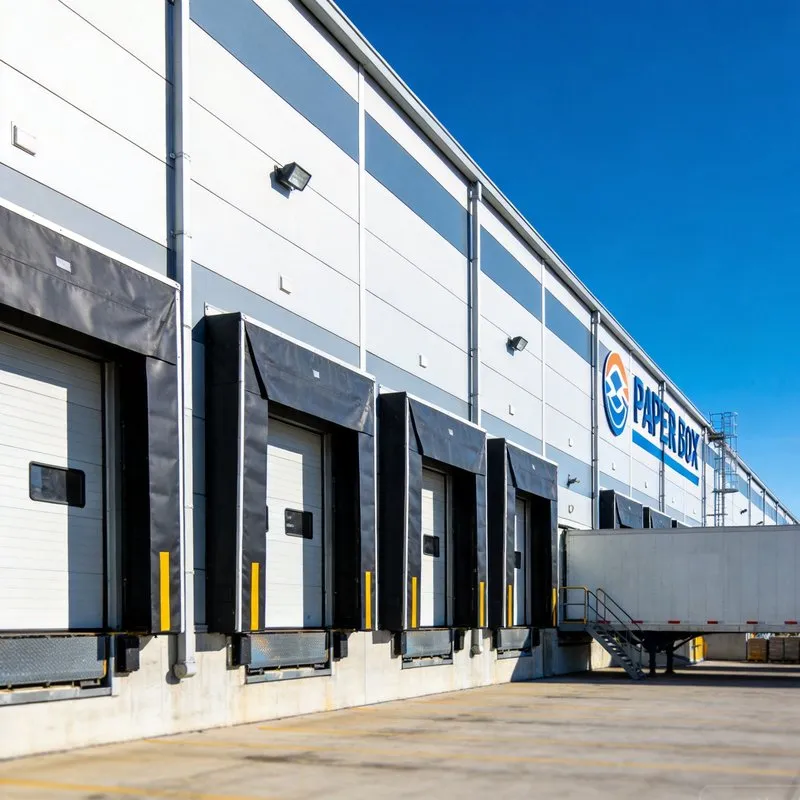
Pharmaceutical Paper Box Packaging — ISO 15378 GMP-Compliant Manufacturing for OTC, Prescription, and Medical Device Cartons
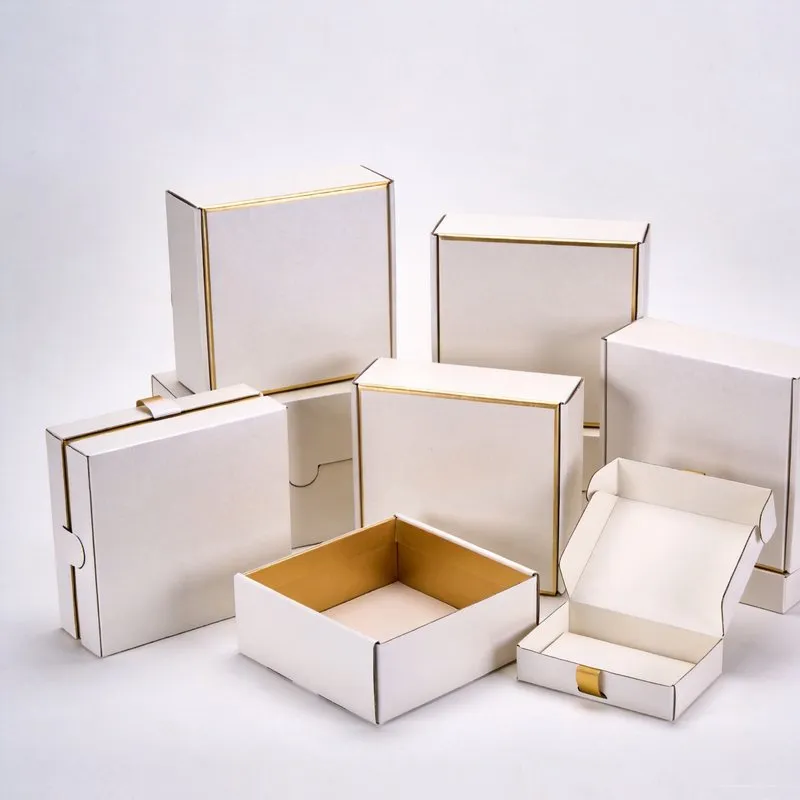
Why Pharmaceutical Packaging Demands Manufacturing Excellence
Pharmaceutical packaging is not ordinary packaging. A folding carton for ibuprofen tablets carries regulatory weight that a cosmetics box never will. It must protect product integrity through global distribution chains, communicate legally mandated information with zero errors, and in many cases, prevent children from accessing contents while remaining usable by elderly patients. One misprinted dosage instruction or a failed tamper-evident seal is not a cosmetic flaw — it is a patient safety incident that can trigger a batch recall.
Guangdong Bincai Color Printing Co., Ltd. has invested in the systems, certifications, and production infrastructure to serve pharmaceutical brands with the same rigor they expect from their active pharmaceutical ingredient (API) suppliers. Our ISO 15378:2017 certification — the GMP standard specific to primary and secondary packaging materials for medicinal products — is audited annually and governs everything from raw material traceability to clean-area production protocols.
With 23 years of paper box manufacturing since 2003, an 18,000 sqm facility (10,000 sqm original plant + 8,000 sqm smart factory expansion, 2025), KBA Rapida 105 4-color and Heidelberg Speedmaster CD 102 7+1 UV presses, and integrated post-press die-cutting on Bobst SP 102 BMA autoplatens, Bincai delivers pharmaceutical cartons at scale — 1.7 million color boxes daily — with the documentation discipline that regulatory auditors demand.
Pharmaceutical Packaging Formats We Manufacture
Bincai produces the full range of secondary packaging formats for the pharmaceutical, nutraceutical, and medical device industries:
| Format | Best For | Key Features |
|---|---|---|
| Straight Tuck-End (STE) | OTC tablets, capsules, blister packs | Standard pharmacy shelf format, leaflet retention |
| Reverse Tuck-End (RTE) | Supplement bottles, vials, tubes | Ergonomic opening, cost-efficient for high-volume runs |
| Crash-Lock / Auto-Bottom | Heavy glass bottles, syrup containers | Reinforced base supports weight, rapid assembly |
| Child-Resistant (CR) Cartons | Prescription drugs, high-potency supplements | ISO 8317 / 16 CFR 1700 / EN 14375 compliant push-and-turn or squeeze-and-slide mechanisms |
| Tamper-Evident Cartons | OTC drugs, medical devices | Perforated tear strips, void-pattern security labels, glued-end detection |
| Braille-Embossed Cartons | EU-market pharmaceuticals | EU Directive 2004/27/EC compliant, registered braille cells, braille on 2+ panels |
| Literature/Leaflet Cartons | Patient information leaflets, IFUs | Integrated leaflet retention flaps, multi-panel construction |
| Pharmaceutical Inserts & Trays | Ampoule holders, vial dividers, syringe nests | Die-cut E-flute or solid board, clean-area production |
ISO 15378:2017 — The GMP Standard for Packaging Materials
ISO 15378 is the pharmaceutical adaptation of ISO 9001 that incorporates Good Manufacturing Practice (GMP) principles specific to primary and secondary packaging. Bincai’s certification means:
What ISO 15378 Covers at Bincai
| GMP Element | Bincai Implementation |
|---|---|
| Risk Management | FMEA-based risk assessment on every new pharmaceutical SKU before production approval |
| Contamination Control | Dedicated pharma production scheduling with full line clearance between batches; UV-cured inks eliminate solvent migration risk |
| Traceability | Lot-level traceability from paperboard reel to finished carton; raw material batch codes recorded against every production order |
| Validation | IQ/OQ/PQ (Installation / Operational / Performance Qualification) on all pharma-dedicated tooling and processes |
| Change Control | Formal change management — no material, process, or supplier change without documented review and customer notification |
| Documentation | Batch manufacturing records (BMR) maintained for minimum 5 years; certificate of conformance issued with every shipment |
| Clean Area Production | Controlled environment for pharma runs — segregated from general packaging production, dedicated tooling storage |
| Supplier Qualification | All paperboard and adhesive suppliers audited against GMP criteria; FSC Chain-of-Custody maintained end-to-end |
Child-Resistant Packaging — Safety by Design
Child-resistant (CR) packaging is legally mandated for many prescription drugs, OTC products containing iron, and high-potency dietary supplements. Bincai manufactures CR folding cartons certified to international standards:
| Standard | Region | Application |
|---|---|---|
| ISO 8317 | International | Child-resistant packaging — requirements and testing procedures for reclosable packages |
| 16 CFR 1700 | United States | Poison Prevention Packaging Act (PPPA) — CR testing with panels of children (42–51 months) and older adults (50–70 years) |
| EN 14375 | European Union | Child-resistant non-reclosable packaging for pharmaceutical products |
| EN 862 | European Union | Child-resistant non-reclosable packaging for non-pharmaceutical products |
CR Mechanisms We Produce
- Push-and-Turn Cartons: Requires simultaneous downward pressure and rotation — common for pill bottles housed in carton sleeves
- Squeeze-and-Slide Blister Packs: Lateral pressure on marked points releases the locking mechanism
- Peel-Push Blister Lidding: Multi-layer lidding with paper/PET/aluminum construction — peel backing first, then push tablet through
- Locking Tab Cartons: Hidden locking tabs that require two-handed operation — intuitive for adults, impenetrable for children under 5
Every CR design undergoes third-party panel testing at certified laboratories before production release. Bincai coordinates the testing process and maintains certification documentation for each SKU.
Tamper-Evident Features for Patient Confidence
Tamper evidence is a regulatory requirement for OTC drugs in most markets and an increasingly expected feature for dietary supplements and medical devices. Bincai integrates tamper-evident features directly into carton construction:
| Tamper-Evident Feature | How It Works | Best Application |
|---|---|---|
| Perforated Tear Strip | Integrated perforation on carton flap — must be torn to open, cannot be reclosed invisibly | OTC cartons, supplement boxes |
| Glued-End Detection | End flaps glued with pattern adhesive — any opening delaminates the fiber, leaving visible tear evidence | High-security pharma cartons |
| Security Seal Labels | Void-pattern holographic or destructible vinyl labels applied over closure points | Medical device kits, high-value prescriptions |
| Tamper-Evident Tape | Custom-printed tape with “VOID OPEN” pattern — reveals message when peeled | Bulk pharma shippers, wholesale cartons |
| Heat-Sealed Blister Cards | Paperboard card heat-sealed to blister — separation destroys card surface | Unit-dose blister packs |
Braille Embossing — EU Regulatory Compliance
Under EU Directive 2004/27/EC (amending Directive 2001/83/EC), all medicinal products marketed in the European Union must include the product name and strength in braille on the outer packaging. Bincai’s Bobst SP 102 BMA die-cutters, equipped with braille embossing tooling, produce registered braille cells that meet the Marburg Medium font specifications:
- Cell dimensions: 2.5 mm dot spacing, 6.0 mm cell spacing, 10.0 mm line spacing
- Embossing height: 0.15–0.20 mm above substrate surface for tactile legibility
- Placement: Standard positions on front and/or side panels per marketing authorization
- Verification: Tactile quality inspection on every batch using calibrated pin gauges
We maintain a library of registered braille tooling for repeat pharmaceutical clients, reducing lead time and tooling amortization across production runs.
Regulatory Compliance — Global Markets
Pharmaceutical packaging must satisfy the regulatory framework of each destination market. Bincai’s material and process controls ensure compliance:
| Regulation | Region | What It Governs |
|---|---|---|
| FDA 21 CFR Part 211 | United States | cGMP for finished pharmaceuticals — packaging and labeling controls |
| EU GMP Annex 11 / 15 | European Union | Computerized systems / qualification and validation for packaging |
| EU FMD 2011/62/EU | European Union | Falsified Medicines Directive — serialization, unique identifiers, anti-tampering device |
| DSCSA | United States | Drug Supply Chain Security Act — product tracing, serialization, verification |
| Health Canada GUI-0001 | Canada | GMP guidelines for packaging materials |
| TGA PIC/S GMP | Australia | Therapeutic Goods Administration — GMP for packaging |
| ANVISA RDC 17/2010 | Brazil | GMP for packaging materials |
| CDSCO Schedule M | India | GMP requirements for pharmaceutical packaging |
Material Validation for Pharma
Paperboard used in pharmaceutical packaging must meet stricter standards than general packaging substrates:
| Material Property | Pharma Requirement | Bincai Standard |
|---|---|---|
| Substrate | Solid Bleached Sulfate (SBS) or Folding Box Board (FBB) — virgin fiber only for primary contact | GC1/GC2 grades, FSC-certified, supplier audited |
| GSM Range | 250–450 gsm for structural cartons; 200–300 gsm for blister cards | Full range in production |
| Brightness | ≥ 85% ISO for consistent printing of fine-print regulatory text | 88–92% ISO |
| Low Migration Inks | UV-cured low-migration inkset — no benzophenone, no ITX | Heidelberg 7+1 UV with low-migration formulation |
| Adhesives | Water-based, solvent-free, FDA 21 CFR 175.105 compliant for indirect food/ drug contact | Henkel / Bostik pharma-grade adhesives |
| Coatings | Aqueous dispersion coatings only — no solvent-based varnishes | Full aqueous coating line |
Quality Control — Beyond Standard
Pharmaceutical packaging QC at Bincai extends beyond our standard 7-stage quality gate system with additional pharma-specific controls:
| QC Stage | Standard Packaging | Pharmaceutical Additions |
|---|---|---|
| Incoming Material | Visual inspection, GSM verification | Supplier CoA verification, batch-level traceability recording, migration testing certificates |
| Pre-Press Proofing | Color proof, content review | Double-independent text verification — two operators independently verify every word of regulatory copy against approved artwork |
| In-Process Print | Heidelberg spectrophotometry, ΔE ≤ 2.0 | In-line barcode verification — every barcode scanned at speed, ISO 15416 grading ≥ B (2.5) |
| Post-Print QC | Visual inspection, color consistency | Braille dot height measurement on statistical sample; missing label detection |
| Die-Cutting | Bobst ±0.1 mm registration | Line clearance verification — signed checklist confirming previous batch fully removed |
| Gluing / Assembly | Bond strength, dimensional check | CR mechanism functional test — random sample tested on certified panel fixture |
| Final Audit | AQL 2.5 sampling, visual | AQL 1.0 tightened sampling; retain sample archive (2-year retention); batch release documentation package |
Serialization and Track-and-Trace Readiness
The global shift toward pharmaceutical serialization — driven by the EU Falsified Medicines Directive and the US DSCSA — requires packaging that supports unique identifiers. Bincai’s printing infrastructure is serialization-ready:
- High-resolution inkjet: Integration-ready for GS1 DataMatrix, QR codes, and human-readable unique identifiers
- Variable data printing: Heidelberg press with in-line capability for sequential numbering and randomized serialization
- Aggregation support: Carton-to-case-to-pallet mapping via printed case labels with parent-child hierarchy
- Tamper-evident integration: Anti-tampering device (ATD) placement per EU FMD Article 54(o) requirements
The Bincai Advantage for Pharmaceutical Brands
| Capability | Bincai Specification | Industry Standard |
|---|---|---|
| GMP Certification | ISO 15378:2017 — packaging-specific GMP | ISO 9001 only (most converters) |
| Braille Embossing | In-house tooling, Marburg Medium compliance | Outsourced or not offered |
| CR Testing Support | Coordinated third-party panel testing | Buyer manages independently |
| Lead Time | 15–25 days standard; 7–10 days express | 25–35 days |
| Sampling | Free pre-production samples, 5–7 days; CR mechanism prototypes included | 10–14 days |
| Traceability | Lot-level from paperboard reel to finished carton | Batch-level only |
| Documentation | Batch manufacturing record + CoC + CoA per shipment | CoC only |
| Minimum Order | 1,000 units for folding cartons; flexible MOQ for repeat pharma clients | 5,000–10,000 units |
| Flat-Ship Design | Available for CR cartons — 60–75% freight savings | Rarely offered |
Factory Specifications
| Specification | Detail |
|---|---|
| Presses | KBA Rapida 105 4-color offset + Heidelberg Speedmaster CD 102 7+1 UV |
| Post-Press | Bobst SP 102 BMA autoplaten (±0.1 mm registration), Bobst Mistral 110 + Ambition 106 folder-gluers |
| Factory Size | 18,000 sqm (10,000 + 8,000 smart factory, 2025) |
| Daily Output | 1.7 million color boxes + 220,000+ gift boxes |
| Experience | 23 years (founded 2003) |
| Certifications | ISO 9001:2015, ISO 15378:2017 (pharma GMP), FSC Chain-of-Custody, G7 Master Color |
| Clean Production | Dedicated pharma scheduling with line clearance protocols |
| Employees | 80+ skilled staff, including dedicated pharma QC team |
| Lead Time | 15–25 days standard; 7–10 days express |
| Sampling | Free pre-production samples including CR prototypes, 5–7 day turnaround |
| Shipping | Flat-ship design available — 60–75% freight reduction |
| Export Markets | 60+ countries |
| Compliance | REACH, RoHS, Prop 65, EN 71, FDA food contact, pharma GMP |
FAQ
Q: Does Bincai have ISO 15378 GMP certification specifically for pharmaceutical packaging? A: Yes. Bincai is ISO 15378:2017 certified — the international standard for GMP applied to primary and secondary packaging materials for medicinal products. The certification is audited annually and governs our risk management, contamination control, traceability, change control, and documentation systems for pharmaceutical production.
Q: Can Bincai produce child-resistant (CR) folding cartons that pass ISO 8317 or 16 CFR 1700 testing? A: Yes. We manufacture push-and-turn, squeeze-and-slide, peel-push, and locking-tab CR cartons. Every design is tested at certified third-party laboratories before production release. We coordinate the testing process and maintain certification documentation for your regulatory file.
Q: Do you offer braille embossing for EU pharmaceutical packaging? A: Yes. Our Bobst SP 102 BMA die-cutters are equipped with braille embossing tooling producing Marburg Medium-compliant cells (2.5 mm dot spacing, 0.15–0.20 mm embossing height). We verify braille quality on every batch with calibrated pin gauges.
Q: What is your minimum order quantity (MOQ) for pharmaceutical folding cartons? A: Our standard MOQ is 1,000 units. For established pharmaceutical clients with repeat orders, we offer flexible MOQ arrangements — we understand that clinical trial materials, stability batches, and market-launch quantities have different volume profiles than commercial production.
Q: How do you prevent mix-ups between different pharmaceutical products during production? A: We use formal line clearance procedures between every batch: signed checklists confirming removal of all materials, labels, and work-in-progress from the previous run. Dedicated pharma scheduling prevents concurrent production of different pharmaceutical SKUs. Every raw material batch code and production order is recorded in the batch manufacturing record.
Q: Can Bincai support serialization and track-and-trace requirements for EU FMD or US DSCSA compliance? A: Yes. Our Heidelberg press supports in-line variable data printing for serialization. We can print GS1 DataMatrix codes, QR codes, sequential numbering, and randomized unique identifiers. We also support aggregation (carton-to-case-to-pallet) and tamper-evident feature integration per EU FMD requirements.
Ready to bring your pharmaceutical packaging to GMP-compliant production? Contact Guangdong Bincai Color Printing Co., Ltd. for a free consultation, sample request, or quotation. 23 years of paper box manufacturing excellence — from ISO 15378-certified folding cartons to child-resistant packaging, manufactured in our 18,000 sqm Foshan facility with KBA 1050 and Heidelberg 7+1 UV presses.
Ready to Start Your Packaging Project?
Free consultation · Custom design · Factory-direct pricing
Get a Free QuoteTel: +86-18934352881 | Email: qo82@icloud.com