From Concept to Container: The 12-Step Paper Box Manufacturing Process at Bincai
Introduction: Why Understanding the Process Matters
When you place an order for 50,000 custom paper boxes from a Chinese manufacturer, a lot happens between your purchase order and the container arriving at your warehouse. Understanding those 12 steps isn’t just curiosity — it’s how you avoid production delays, catch quality issues before they ship, and negotiate better terms.
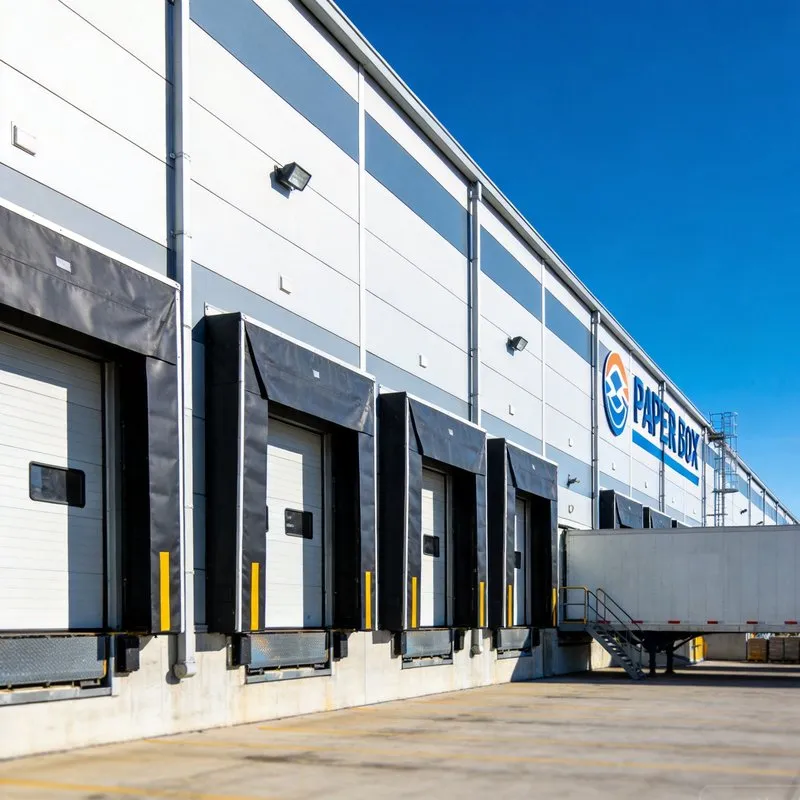
At Bincai, the entire process runs under one roof across 18,000 sqm in Foshan’s Pearl River Delta manufacturing corridor. That vertical integration — from pre-press to finished pallet — is what makes the difference between a 45-day lead time and a 90-day one, between 99.6% quality pass rates and the industry average of 93%.
Here’s exactly what happens, step by step.
Step 1: Design Consultation & Feasibility Review (Days 1–3)
Everything starts with your specifications — dimensions, material preferences, print design, surface finishing requirements, and budget. Bincai’s pre-sales engineering team reviews your brief against three criteria:
- Structural feasibility: Can this box be die-cut from standard sheet sizes with acceptable waste rates?
- Material availability: Is your specified paperboard (CCNB, duplex, greyboard, kraft, SBS) in stock at the required caliper?
- Finishing compatibility: Will your requested foil stamp + spot UV + embossing combination work on your chosen substrate?
If any flag is raised here, the team proposes alternatives before money is spent on tooling. This step prevents the most expensive kind of surprise: discovering a design flaw after dies are already cut.
Key output: Feasibility report with recommended adjustments, material alternatives, and cost estimates for tooling.
Step 2: Pre-Press & Plate Making (Days 2–5)
Once the design is approved, Bincai’s 8-person pre-press team goes to work. This is where 23 years of experience most directly impacts quality — color separation, trapping, and plate calibration determine whether your print looks like the Pantone swatch or not.
What happens here:
| Process | Equipment / Standard |
|---|---|
| Color separation | Heidelberg Prinect workflow, G7 master calibration |
| Digital proofing | Epson SureColor P9000 with GMG ColorProof |
| CTP plate making | Kodak Magnus Q800, 2,400 DPI |
| Plate inspection | Manual + automated dot measurement |
| Die-line verification | CAD overlay against artwork |
Bincai is G7 Certified (Idealliance), which means every press run is calibrated to the same neutral print density curve. Your Pantone 186C red will match across rigid boxes, folding cartons, and corrugated mailers — even if they’re printed on different substrates and different days.
Step 3: Material Procurement & Conditioning (Days 3–7)
Paperboard is a living material — it absorbs and releases moisture based on ambient humidity. Bincai’s 3,000 sqm climate-controlled raw material warehouse maintains 20–25°C and 45–55% RH year-round.
Standard materials in inventory:
| Material | Typical GSM | Primary Use |
|---|---|---|
| CCNB (Clay-Coated News Back) | 250–400 | Folding cartons, economy rigid boxes |
| Duplex board (white back) | 300–450 | Premium folding cartons, cosmetic boxes |
| Greyboard / chipboard | 1,000–2,000 | Rigid box walls and base |
| SBS (Solid Bleached Sulfate) | 250–400 | High-end folding cartons, food-grade |
| Kraft board | 250–450 | Eco-friendly boxes, corrugated mailers |
| Corrugated (B/E/F-flute) | 3-ply / 5-ply | Shipping boxes, e-commerce mailers |
| Art paper (coated) | 128–350 | Litho-laminated wrap for rigid boxes |
All paperboard is FSC-certified with full chain of custody. Bincai maintains 30–45 days of strategic inventory for all standard calipers.
Step 4: Printing — KBA 1050 4-Color Offset (Days 4–8)
This is the heart of the factory. Bincai’s KBA Rapida 105 is a German-engineered 4-color offset press running at 10,000–15,000 sheets per hour. It handles sheet sizes up to 740 × 1,050mm — large enough to gang up multiple box designs on a single sheet, reducing waste and setup time.
Why KBA matters for your boxes:
- In-line color control: Spectrophotometric scanning on every sheet, not just spot checks. Density drift is corrected automatically within ±0.05.
- Perfect registration: ±0.1mm across 4 colors, critical when your design has fine lines, small text, or tight trapping.
- Low waste rates: Automatic blanket washing and fast makeready mean under 2% setup waste, vs. 5–8% on older presses.
For jobs requiring more than 4 colors, the Heidelberg Speedmaster 7+1 UV press adds three additional units plus an inline coater. That means: CMYK + 2 Pantone spot colors + aqueous coating, all in a single pass with instant UV curing.
Your boxes are typically printed on: 128–157 gsm art paper (for litho-lamination onto rigid box structures) or directly on 250–400 gsm CCNB/duplex (for folding cartons).
Step 5: Surface Finishing (Days 5–10)
Surface finishing is what transforms a printed sheet into a premium packaging experience. Bincai offers 11 finishing techniques, applied in a specific order to avoid incompatibility:
- Lamination (gloss or matte BOPP film) — Protects the printed surface, adds durability
- Spot UV coating — Glossy raised coating on selected areas (logos, patterns)
- Foil stamping — Hot-stamped metallic foil (gold, silver, rose gold, copper, holographic) using magnesium or brass dies
- Embossing / Debossing — Raised or recessed 3D texture, often registered with foil stamping
- Screen printing — For thick, opaque specialty inks (metallics, fluorescents)
- Soft-touch coating — Velvet-feel matte finish, very popular for premium cosmetic and jewelry boxes
- Texture coating (sand, leather grain, linen) — Tactile effects that mimic premium materials
- Scratch-off / security ink — For anti-counterfeiting applications (scratch panels, UV-visible ink)
- Glitter / pearl coating — Decorative effects for luxury and gift packaging
- Thermal transfer ribbon printing — For variable data (batch codes, serial numbers)
- Die-cutting with creasing — Simultaneously cuts the box shape and creases fold lines
Critical detail: Not all finishing combinations work on all substrates. Soft-touch over foil stamp requires specific chemistry to avoid adhesion failure. Bincai’s technicians know these interactions from 23 years of trial data.
Step 6: Die-Cutting & Creasing (Days 6–11)
The flat printed-and-finished sheet now becomes the structural shape of your box. Custom steel-rule dies are fabricated in Bincai’s in-house die shop, mounted on Bobst SP 102-E and SBL 1050 automatic die-cutters.
Accuracy: ±0.2mm cutting tolerance, ±0.15mm creasing position. This level of precision is what allows:
- Folding cartons to assemble without gaps or overlaps
- Insert trays to slide perfectly into rigid box bases
- Magnetic closure flaps to align with 0.5mm gap consistency
Waste optimization: Die layouts are CAD-optimized to maximize sheet utilization. Bincai typically achieves 78–85% material yield — above the industry average of 72%.
Stripping: Automatic stripping stations remove waste material, leaving only the finished blanks. For complex designs with internal cutouts (windows, handle holes), manual stripping teams supplement the automatic process.
Step 7: Gluing & Box Forming (Days 7–12)
Folding cartons are assembled on automatic folder-gluers (Bobst Ambition 106). These machines fold, glue, and compress the carton at speeds of up to 80,000 units per hour. The glue applied is:
- Water-based PVA adhesive for standard folding cartons
- Hot-melt adhesive for quick-grab applications (corrugated mailers)
- Solvent-free PU adhesive for food-grade and pharmaceutical packaging
Rigid boxes follow a different path because they’re assembled by wrapping printed paper around greyboard structures:
- Greyboard is cut to size for base, lid, and side walls
- Corner stays (metal or paper) reinforce the structure
- Printed wrap is glued to the greyboard using automatic rigid box wrapping machines
- Interior lining (velvet, satin, flocked paper, or printed paper) is applied
- Lid and base are mated; magnetic closures, ribbon pulls, or hinges are attached
- Insert trays (EVA foam, cardboard partitions, or molded pulp) are placed inside
Quality check at this stage: Every 200th box is pulled for dimensional verification (caliper measurement of all six sides against the spec) and structural integrity (drop test, compression test on sample lots).
Step 8: Assembly & Insert Installation (Days 8–13)
This is the most labor-intensive stage. Skilled workers assemble multi-component boxes:
- Magnetic closure boxes: Magnet pairs are embedded into the flap and box body with ±0.3mm alignment
- Window boxes: Die-cut PET/PVC windows are glued into position, checked for clarity and absence of adhesive smears
- Ribbon-pull boxes: Satin or grosgrain ribbons are threaded through die-cut slots and secured with hidden tabs
- Multi-tier boxes: Stacked layers are aligned and bonded
- Jewelry boxes: Velvet, satin, or flocked inserts are precisely fitted into compartments
Production rate: A skilled assembly line of 20 workers can produce 8,000–12,000 complex rigid boxes per shift.
Step 9: Seven-Stage Quality Control Gates
Bincai’s quality system isn’t a final inspection — it’s seven embedded gates that catch defects at the point of origin:
| Gate | Stage | What’s Checked | Method | Pass Rate Target |
|---|---|---|---|---|
| QC1 | Incoming materials | Paperboard caliper, moisture, color, surface defects | Digital caliper, moisture meter, visual under D65 lighting | 99.5% |
| QC2 | Pre-press | Plate resolution, dot gain, registration marks | Densitometer, loupe, digital proof comparison | 100% |
| QC3 | Print run | Color density, registration, hickeys, ghosting | Inline spectrophotometer + pull-sheet every 500 sheets | 99.8% |
| QC4 | Post-finishing | Lamination adhesion, foil coverage, embossing depth, coating uniformity | Cross-hatch tape test, visual inspection, micrometer | 99.5% |
| QC5 | Die-cut blanks | Dimensional accuracy, crease depth, edge cleanliness, waste removal | Digital caliper, crease gauge, visual against CAD overlay | 99.7% |
| QC6 | Assembly line | Glue adhesion, alignment, magnet function, insert fit, closure action | Random pull rate: 1 per 200 units | 99.6% |
| QC7 | Pre-shipment | AQL 2.5 / Level II sampling, functional testing, cosmetic appearance | ISTA 1A drop test, compression test, rub test, barcode scan | 99.6% |
Overall quality pass rate: 99.6% — verified across 1.7 million boxes daily.
Step 10: Final Inspection & AQL Sampling (Days 10–14)
For every order, Bincai performs AQL 2.5 / Level II sampling per ISO 2859-1 (equivalent to ANSI/ASQ Z1.4). This means:
- For an order of 50,000 boxes: 500 boxes sampled, maximum 21 defects allowed (0 critical, ≤5 major, ≤21 total)
- For an order of 10,000 boxes: 200 boxes sampled, maximum 10 defects allowed
What’s inspected at this stage:
| Category | Specific Checks |
|---|---|
| Dimensional | Length, width, height ±1mm; wall thickness; lid-to-base gap ≤1mm |
| Print quality | Color match against signed-off sample; no hickeys, scumming, ghosting, or misregistration |
| Finishing | Foil adhesion (tape test), lamination peel strength, embossing depth, UV coating uniformity |
| Structural | Box opens/closes smoothly; magnets hold with specified gram-force; hinges operate without binding |
| Cosmetic | No scratches, glue stains, fingerprints, or edge burrs under 1,000-lux inspection lighting |
| Function | Ribbon pulls smoothly; compartments hold inserts; windows are clear and centered |
| Packaging | Individual polybag seal; bundled correctly; master carton label accurate |
Third-party inspection (SGS, Bureau Veritas, Intertek) is always welcome. Bincai has hosted over 200 third-party inspections with a 100% pass rate on final shipment approval.
Step 11: Export Packaging (Days 11–15)
How your boxes are packed for ocean freight directly affects the condition they arrive in. Bincai’s export packaging protocol uses:
- Individual protection: Each box wrapped in 0.03mm PE polybag (anti-scratch, anti-moisture)
- Bundling: Boxes bundled in units of 10–25 with kraft paper bands (no rubber bands that leave marks)
- Master cartons: 5-ply B-flute corrugated export cartons, typically 450 × 350 × 300mm, burst strength ≥12 kg/cm²
- Palletization: Standard 1,100 × 1,100mm export pallets, stretch-wrapped with corner protectors
- Container loading: 20GP (~28 CBM) or 40HQ (~68 CBM), loaded under Bincai supervisor oversight with photographic documentation
Flat-ship design advantage: Many Bincai boxes are designed to ship flat and be assembled at destination. A standard 40HQ container holds 300,000–500,000 flat-shipped rigid boxes vs. 80,000–120,000 pre-assembled ones. That’s a 60–75% freight cost reduction.
Step 12: Documentation & Shipping (Days 12–16)
The final step is generating export documentation and releasing the container:
- Commercial invoice & packing list — with HS codes, net/gross weights, carton dimensions
- Bill of Lading — typically shipped FOB Yantian or FOB Nansha
- Certificate of Origin — Form E (ASEAN-China FTA), Form F (China-Chile FTA), or generic COO
- FSC Chain of Custody certificate — for customs clearance in EU and North American markets
- ISO 9001:2015 certificate — available on request for buyer’s quality system records
- Lab test reports — REACH, RoHS 3.0, EN71-3, FDA 21 CFR, California Proposition 65 (upon request, per material)
Sea freight transit times from Foshan (via Yantian/Nansha port):
| Destination | Typical Transit |
|---|---|
| Los Angeles / Long Beach | 14–18 days |
| Rotterdam / Hamburg | 26–32 days |
| Dubai / Jebel Ali | 14–18 days |
| Sydney / Melbourne | 14–18 days |
| Tokyo / Osaka | 5–7 days |
| Singapore | 4–6 days |
The Complete Timeline at a Glance
| Phase | Days | Cumulative |
|---|---|---|
| Design consultation & feasibility | 1–3 | Day 3 |
| Pre-press & plate making | 2–5 | Day 5 |
| Material procurement & conditioning | 3–7 | Day 7 |
| Printing (KBA 1050 / Heidelberg 7+1 UV) | 4–8 | Day 8 |
| Surface finishing | 5–10 | Day 10 |
| Die-cutting & creasing | 6–11 | Day 11 |
| Gluing & box forming | 7–12 | Day 12 |
| Assembly & insert installation | 8–13 | Day 13 |
| Final inspection & AQL sampling | 10–14 | Day 14 |
| Export packaging | 11–15 | Day 15 |
| Documentation & shipping | 12–16 | Day 16 |
Standard lead time for a new custom order: 30–35 days (including tooling fabrication). Repeat orders with existing tooling: 18–22 days.
Why Bincai’s Process Delivers Better Results
Three structural advantages make Bincai’s 12-step process more reliable than the industry norm:
1. Vertical Integration
Everything from plate making to palletizing happens under one roof. No handoffs to subcontractors — no “the printer blames the die-cutter, the die-cutter blames the finisher.” One team, one facility, one responsibility.
2. Equipment Investment
The KBA 1050 and Heidelberg 7+1 UV aren’t commodity presses — they represent millions in capital investment and deliver speed, precision, and consistency that older equipment can’t match. Bincai reinvests approximately 8% of annual revenue into equipment upgrades.
3. Experience Density
When your press operator has been running the same KBA 1050 for 15 years, she knows that a 0.02 density drift at 11 AM means the fountain solution needs adjusting before the afternoon humidity spike. That kind of institutional knowledge can’t be documented in a manual — it comes from 23 years of continuous operation.
Frequently Asked Questions
Q: Can I visit the factory before placing an order? A: Absolutely. Bincai welcomes factory audits and pre-production visits. The factory is 90 minutes from Guangzhou Baiyun International Airport (CAN) and 2 hours from Hong Kong International Airport (HKG). Factory audit reports from previous clients are available under NDA.
Q: What’s the minimum order quantity (MOQ)? A: Typically 1,000–3,000 units per design, depending on complexity. Lower than this, and tooling amortization makes the per-unit cost uneconomical. For folding cartons with standard structures, MOQ can go as low as 500 units.
Q: How do I get a sample? A: Digital samples (photo/video) are provided within 48 hours of production. Physical samples ship via DHL/FedEx and typically arrive in 5–7 business days. Sample cost is credited against your production order.
Q: What certifications do you hold? A: ISO 9001:2015 (quality management), FSC Chain of Custody (sustainable forestry), G7 Master (color calibration). Additional compliance testing available: REACH, RoHS 3.0, EN71-3 (toy safety), FDA 21 CFR (food contact), California Proposition 65.
Q: What if I find a quality issue after delivery? A: Bincai’s warranty covers manufacturing defects for 90 days post-delivery. Claims are processed within 48 hours with photographic evidence. For critical defects, replacement production is prioritized at no cost.
Ready to Start Your Project?
Contact Bincai’s packaging engineering team with your specifications — dimensions, quantity, material preferences, and any reference images. You’ll receive a feasibility assessment, tooling estimate, and per-unit pricing within 2 business days.
Guangdong Bincai Color Printing Co., Ltd. Foshan, Guangdong, China ISO 9001:2015 | FSC Certified | G7 Master 23 Years of Paper Box Manufacturing Excellence
Ready to Start Your Packaging Project?
Free consultation · Custom design · Factory-direct pricing
Get a Free QuoteTel: +86-18934352881 | Email: qo82@icloud.com